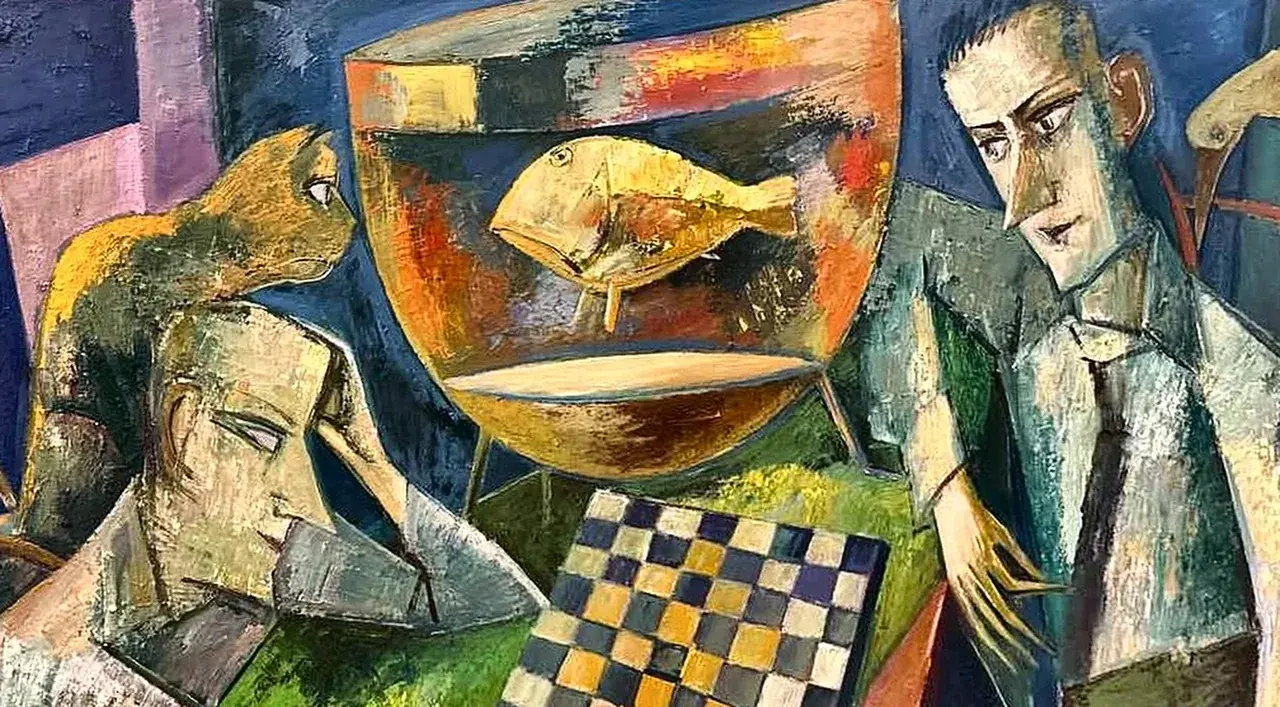
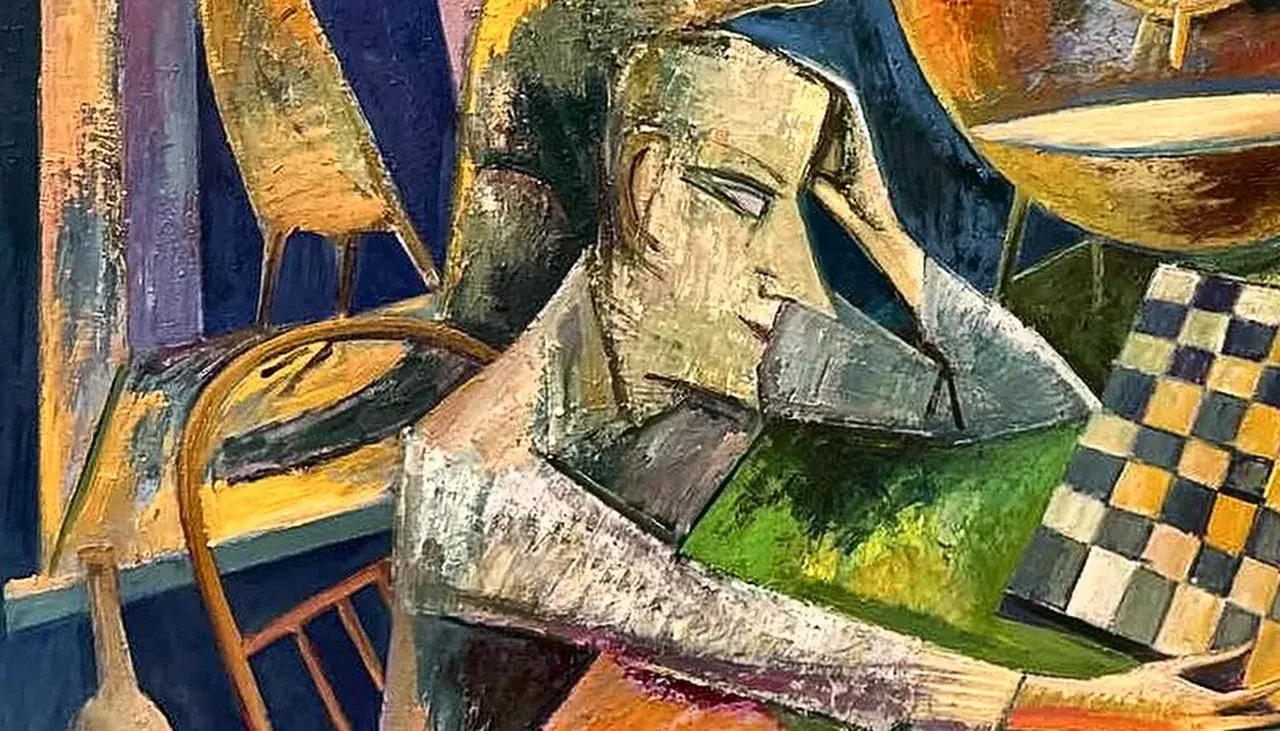
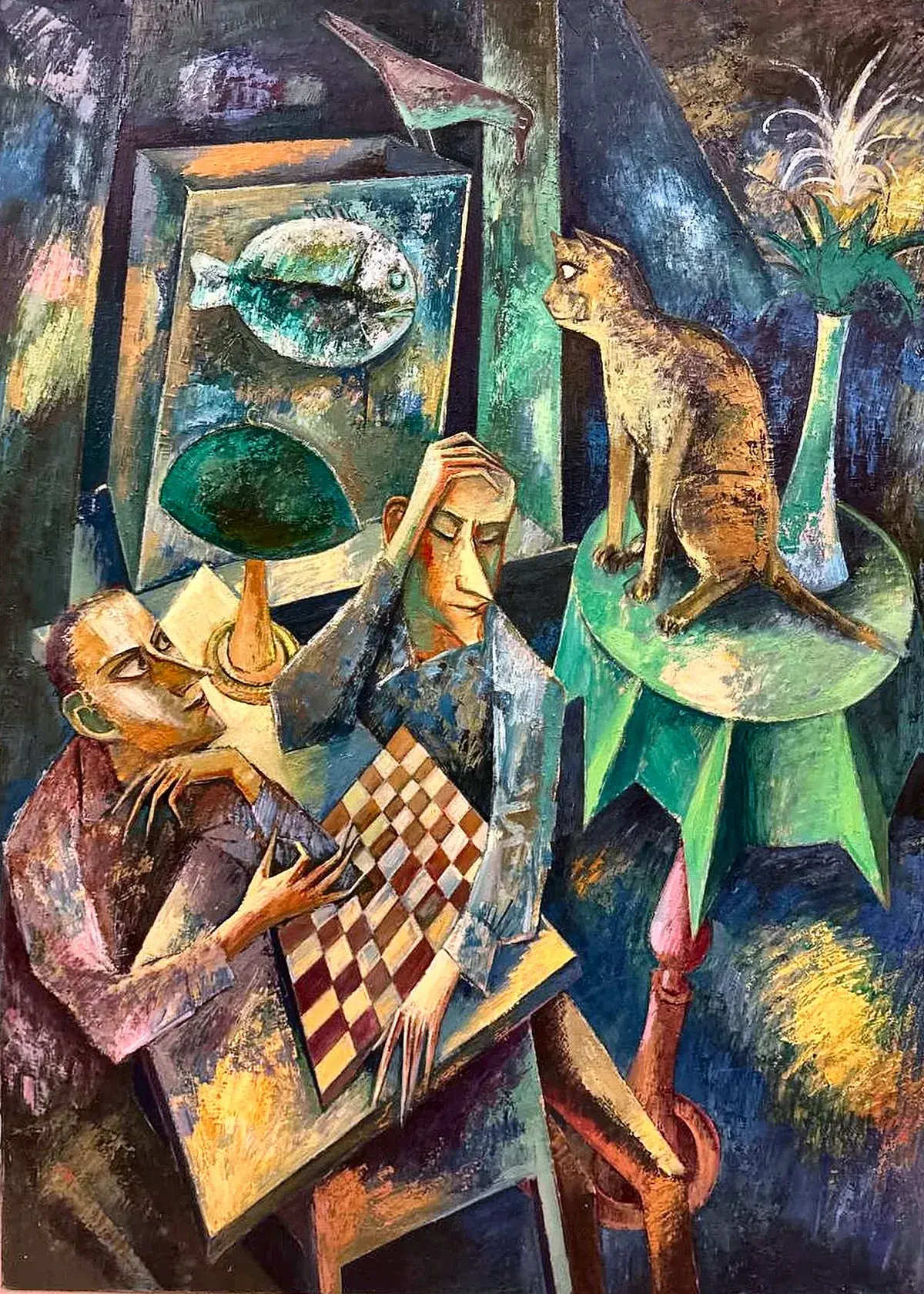
What an oil painting costs and what determines the price
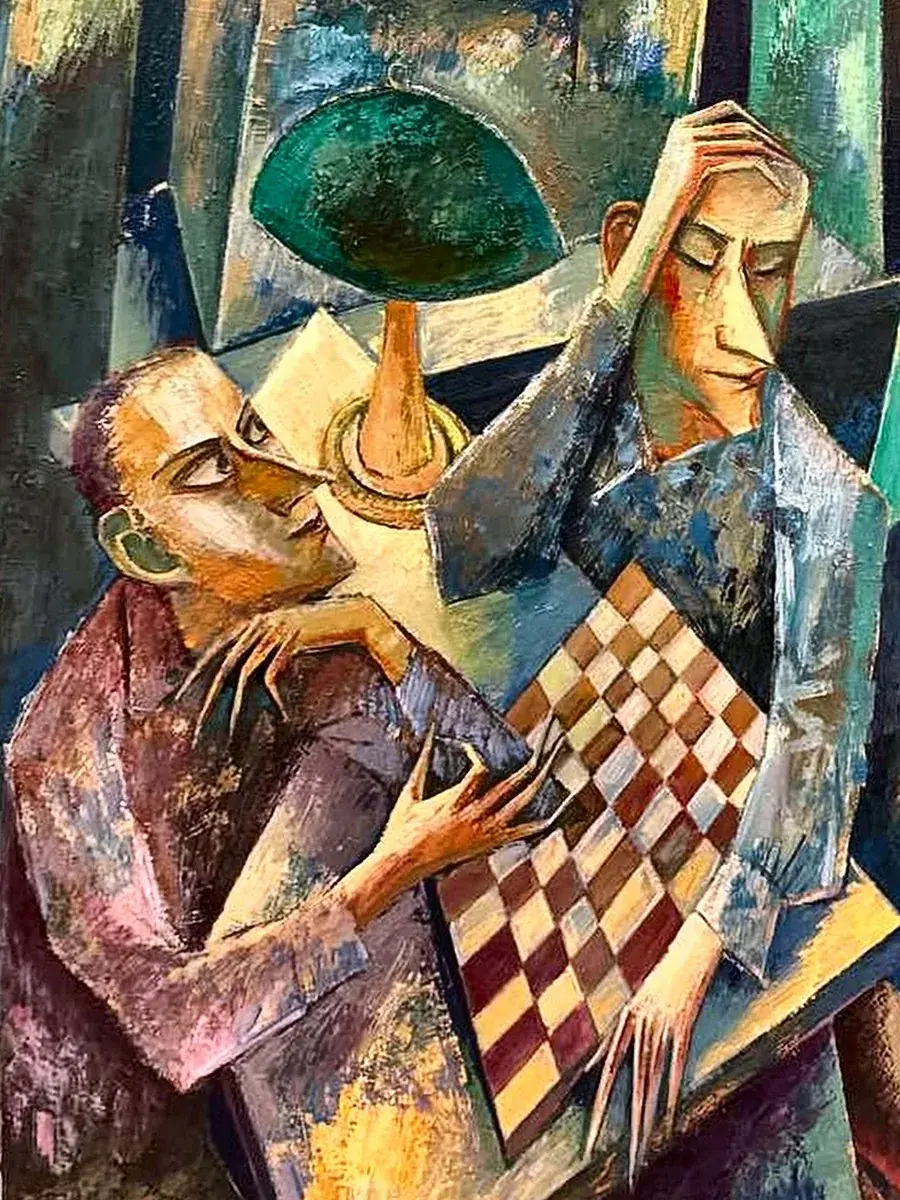
Table of contents
The question of price comes first and almost always goes unanswered directly. Artists deflect, galleries write “price on request”, and the buyer is left with the impression that someone is trying to extract as much as possible.
In fact the price of a painting is made up of a few comprehensible things. Let us take them in order.
What makes up the price
Size of the canvas. The most obvious factor, but not a linear one. A work of 100 × 140 cm is not twice the price of 70 × 100 — it is several times more. The reason is that a large canvas demands not just more paint but more layers, longer drying and a different level of craft: an error on a large format is more visible and harder to correct.
Hours of work. Here the difference is greatest. A multi-layered work with glazes takes months, with pauses for drying between layers. An alla prima study takes a single session. Two works of the same size can differ fivefold in price for exactly this reason.
Complexity of the subject. A figurative composition with several figures, considered space and worked-through detail is a different volume of work from a landscape or a still life. That shows in the price.
Medium and support. Oil on linen is more durable and more expensive than oil on board. Gouache on paper is considerably more accessible than oil of the same size.
The artist's name. The least obvious factor, and often the decisive one. A painter with a thirty-year exhibition history, works in private collections and a documented catalogue of works prices his work differently from a beginner. This is not vanity — it is that such an artist's work holds and builds value rather than losing it.
Why galleries cost more
A gallery takes commission. In Europe this is typically thirty to fifty percent of the price.
That money does not vanish: the gallery selects, rents premises, mounts exhibitions, keeps records, provides guarantees, works with collectors. That is what is being paid for.
But for a buyer the arithmetic is simple: the same work by the same artist costs noticeably more in a gallery than in the studio. The difference is exactly the commission.
Buying directly means you pay the studio price. And you get what a gallery cannot provide: a conversation with the artist, the chance to see other works, an understanding of the context.
Price ranges
A guide for contemporary European figurative painting.
| Format | Price range |
|---|---|
| Study, 30 × 40 cm | from several hundred euros |
| Medium, 60 × 80 cm | €800–2,000 |
| Large, 100 × 140 cm | €2,500–5,000 |
| Gouache on paper, 50 × 70 cm | considerably less than oil of the same size |
This is an order of magnitude, not a price list. The specific figure depends on everything above.
In my studio, oil works range from €900 to €3,900. The price of each is given on its own page — no “on request”, no haggling.
Why prices are open
The “price on request” practice has its logic: the gallery wants to start a conversation, assess the buyer, work individually.
For the buyer it is a barrier. Someone who sees a work and no price will in most cases simply close the page — because they assume it costs more than they are prepared to pay.
An open price saves both sides time. You know at once whether the work fits your budget, and you do not spend an evening on correspondence that leads nowhere.
Can you negotiate
Short answer: no, and there is a reason.
The price of a painting is not a markup that can be shaved. It is a valuation of the time and craft that went into a particular work. A discount would mean the work is worth less than stated, and that undermines the value of every other work by the same artist, including those already in collections.
Artists who haggle lose their price line quickly: the next buyer learns that someone got it cheaper and wants the same.
What is negotiable: payment terms, timing, framing, shipping. That is a normal part of the conversation.
Does the value rise
A question that interests everyone, and the honest answer is not clear-cut.
Painting is not a guaranteed investment. A work's value rises if the artist's reputation rises: new exhibitions, publications, entry into notable collections, mentions in the press. If that does not happen, the work is worth roughly what it was worth.
What works in your favour buying directly: you enter at the studio price, that is, without the gallery markup that on the secondary market has to be earned back first. Plus provenance documented from the first point — the thing most highly valued on the secondary market.
But buying painting as a financial instrument is a doubtful idea. Buying what you want to look at every day, and not losing money in the process, is a sensible one.
Frequently asked questions
Why do two works of the same size cost differently?
The difference lies in the number of layers and the hours of work. A multi-layered canvas with glazes takes months with drying pauses; an alla prima study takes one session. Add the complexity of the subject: a composition with several figures demands a different effort from a still life.
Is the frame included in the price?
No. The price covers the work on its stretcher, ready to hang. A frame is a separate decision and a separate cost; many buyers choose one themselves, to suit their own interior.
Can I pay in instalments?
Payment terms are open to discussion. The usual arrangement for works in the higher range is part on reservation, the remainder on handover. The work is withdrawn from sale in the meantime.
Are there discounts for buying several works?
The price of each work is fixed. But when buying several canvases, shipping and framing terms are negotiable — that is where real savings are.
Prices for all available works are given in the catalogue. If a particular canvas interests you, or you would like to discuss terms, write to me and I will reply within a day.