Stańczyk in painting: from Matejko to a contemporary reading
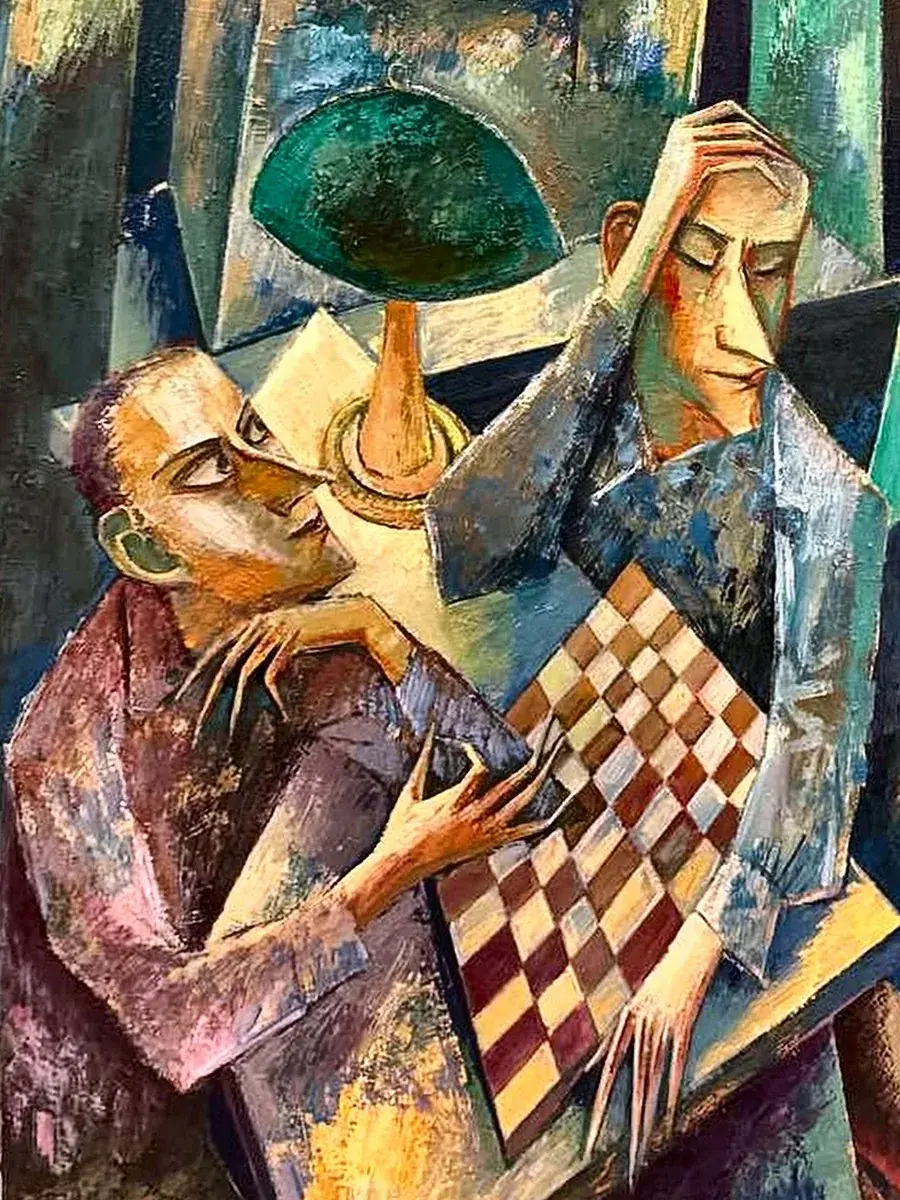
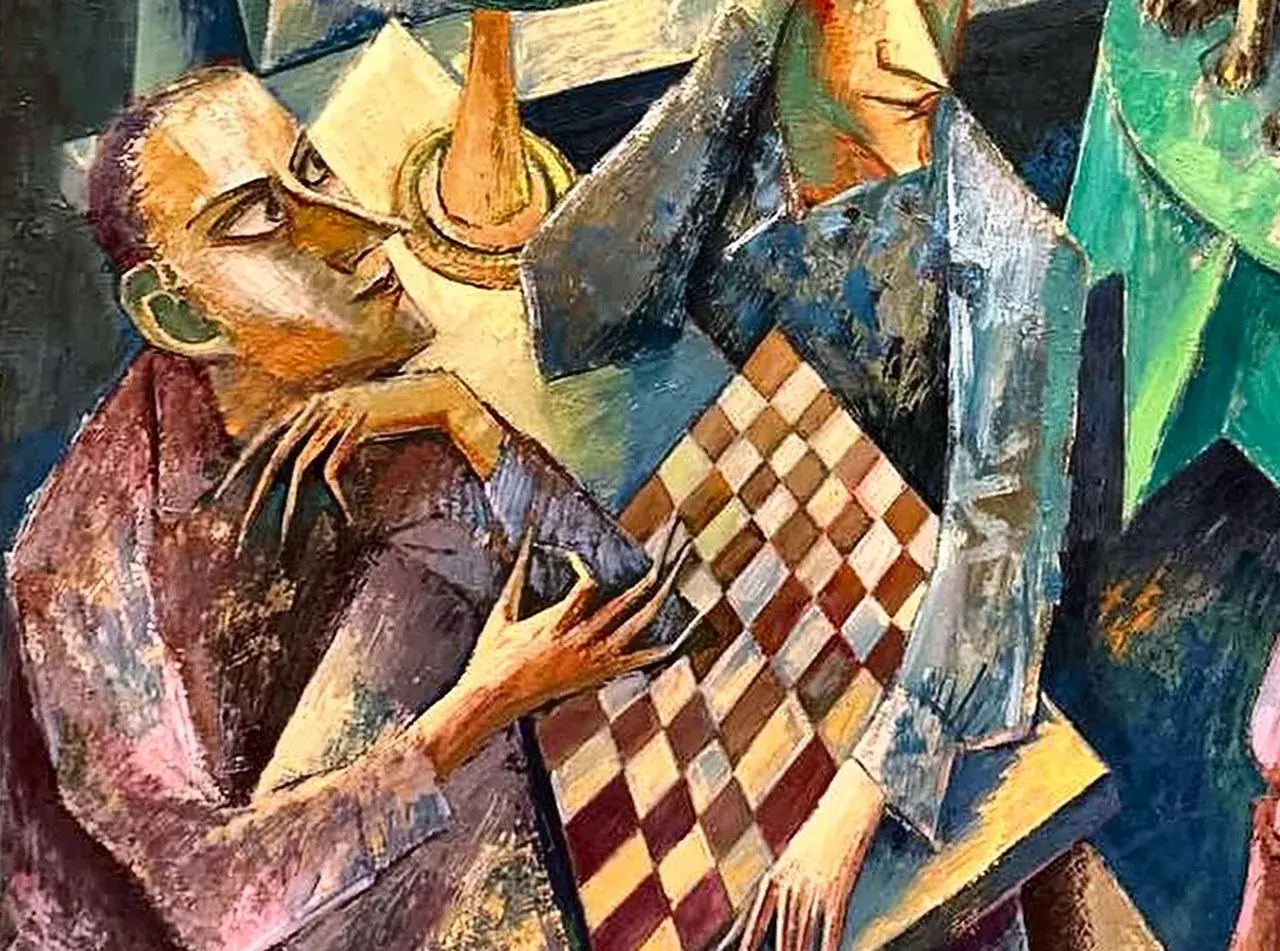
Table of contents
In Jan Matejko's painting of 1862 the court is dancing in the next room, and the jester sits alone, in red, wearing an expression no one expects from a jester. He has just received word that Smolensk is lost. Those celebrating do not yet know, or do not want to.
That single canvas was enough for Stańczyk to stop being a historical person and become a figure — someone through whom Polish culture has for a hundred and sixty years spoken about things that are hard to say directly.
Who he actually was
Stanisław Gąska, known as Stańczyk, lived at the turn of the fifteenth and sixteenth centuries and served three kings: Alexander Jagiellon, Sigismund the Old and Sigismund Augustus. He was a court jester — a post that in the Europe of his time meant something entirely different from today's associations with entertainment.
The jester held a privilege no one else at court possessed: he could tell the king the truth to his face and not suffer for it. Formally because his words were not taken seriously. In practice because a ruler needed at least one voice that did not lie out of fear.
Surviving anecdotes show a man of sharp mind and blunt judgement. The chroniclers — Łukasz Górnicki, Marcin Kromer, Jan Kochanowski — wrote of him as someone who understood politics better than half the senate.
What Matejko made of him
The painting “Stańczyk during a ball at the court of Queen Bona after the loss of Smolensk” was made when Matejko was twenty-four. He painted it in a year when Poland had been off the map for seventy years.
The composition does one thing and does it flawlessly. To the right, in depth, through open doors, the lit ballroom is visible — movement, colour, dancing couples. To the left, in the foreground, sits a motionless figure in red. On the table beside him lies a letter.
Matejko gave the jester his own face. This is not decoration: the painter identified himself with the figure of the man who sees the catastrophe while others celebrate, and whom nobody heeds, because after all it is only the jester.
From that point Stańczyk became something of a cipher in Poland. Politicians invoked him, so did publicists and painters. A current of Kraków conservatives even came to be called the Stańczycy, after the title of their political pamphlet.
Why I keep returning to this figure
I came to Poland in 1990. Stańczyk appeared in my work soon after and has stayed — he is one of the five cycles I still work on.
The reason is not historical. What interests me is the mechanism itself: a situation in which the truth may be spoken only by someone whom it has been decided in advance not to take seriously. This is not a closed chapter of the sixteenth century. It is a pattern that reproduces itself wherever power would rather hear confirmation than information.
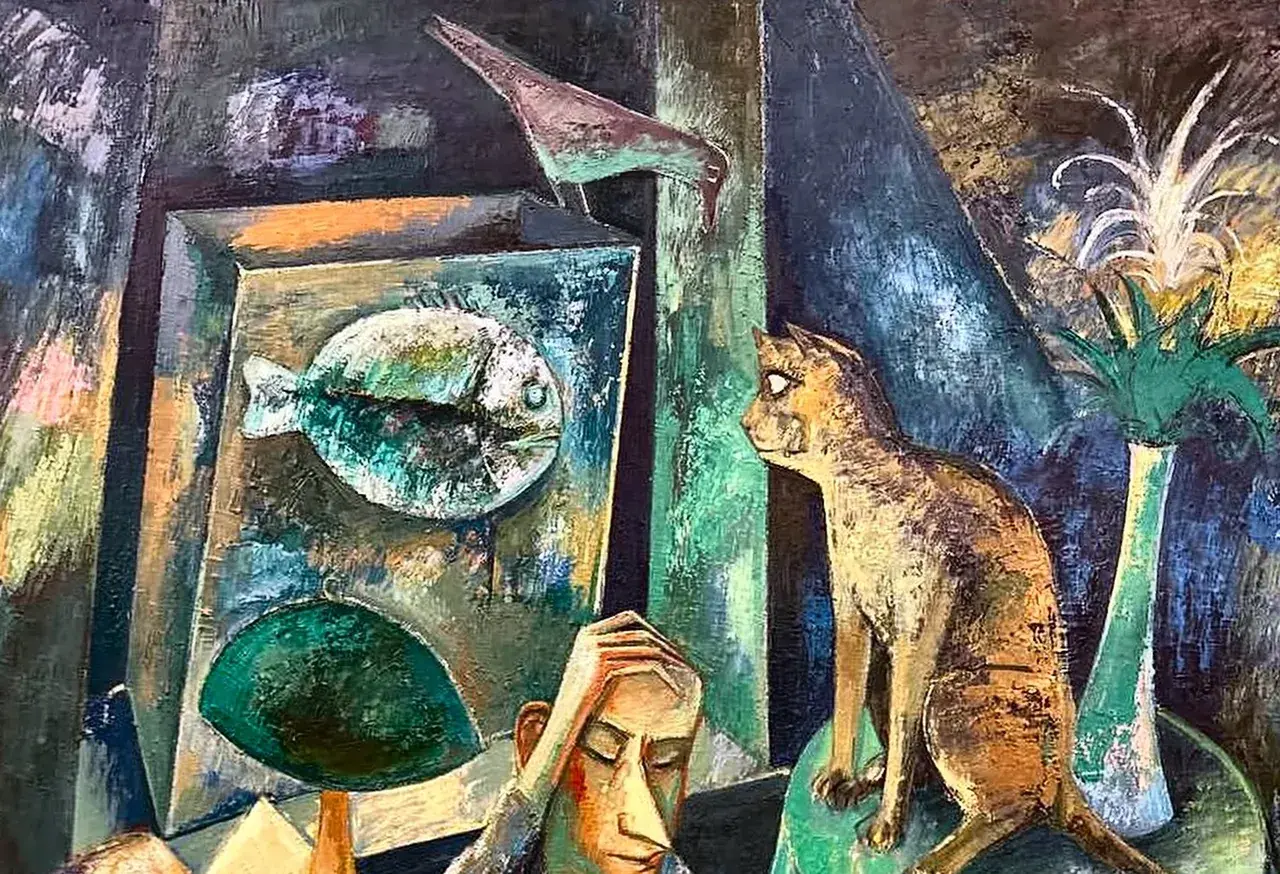
In my cycle Stańczyk has no fixed era. He appears in different clothes and different rooms, sometimes in surroundings the historical jester could not have known. What stays constant is the expression — of a man who knows more than those present and says nothing, because speaking would change nothing anyway.
How this reading differs from Matejko's
Matejko painted a moment. A particular night, a particular message, a particular defeat.
What interests me is a condition, not an event. So in my works there is neither the letter on the table nor the door to the ballroom. There is no date the painting refers to.
There is, however, something Matejko does not have: in my work Stańczyk is sometimes in company. He sits at a table with others, plays chess, looks at someone who is not looking at him. The solitude in Matejko is physical — the figure is alone in the room. In mine it is solitude among people, which weighs more.
The colour works differently too. In Matejko the red of the costume is the only strong accent in a dark space. In mine colour is distributed more widely — the jester does not stand apart from his surroundings but is embedded in them.
Stańczyk outside Poland
For a Polish viewer the figure needs no introduction. Outside Poland it has to be explained — and it turns out to explain easily.
The figure of the truth-telling fool exists in European culture independently of any Polish context. The Fool in King Lear does precisely the same thing and pays the same price. German and English viewers recognise the mechanism at once, even having never heard the name Stańczyk.
It is a rare case of a local historical figure translating without loss. Usually it works the other way round.
The cycle today
Works with Stańczyk have been made continuously for over three decades. I have neither a plan nor a target number — the figure returns when a new situation is found for him.
Some canvases have gone into private collections, others remain in the studio. The cycle intersects with the others: motifs from The Master and Margarita, Don Quixote and Critique of Power speak in essence of the same thing — of a person facing force, absurdity and inevitability.
Frequently asked questions
Are works from the Stańczyk cycle available to buy?
Some canvases remain in the studio and are available. Works that have entered private collections carry the corresponding status in the catalogue. Prices and dimensions are given with each work.
Are these illustrations of Matejko's painting?
No. Matejko painted a specific historical moment; my interest is the figure itself and the mechanism behind it. That is why my works contain neither the letter about Smolensk nor a sixteenth-century interior.
Where can Matejko's original be seen?
At the National Museum in Warsaw. The 1862 painting is among the most frequently reproduced works in Polish art history.
Is the cycle finished?
No. New works appear when a new situation is found for the figure. Over thirty years such situations have not been in short supply.
If a particular work from the cycle interests you, or you would like to see the canvases at the Warsaw studio, write to me. I reply within a day.