The Master and Margarita: seven hundred canvases from one novel
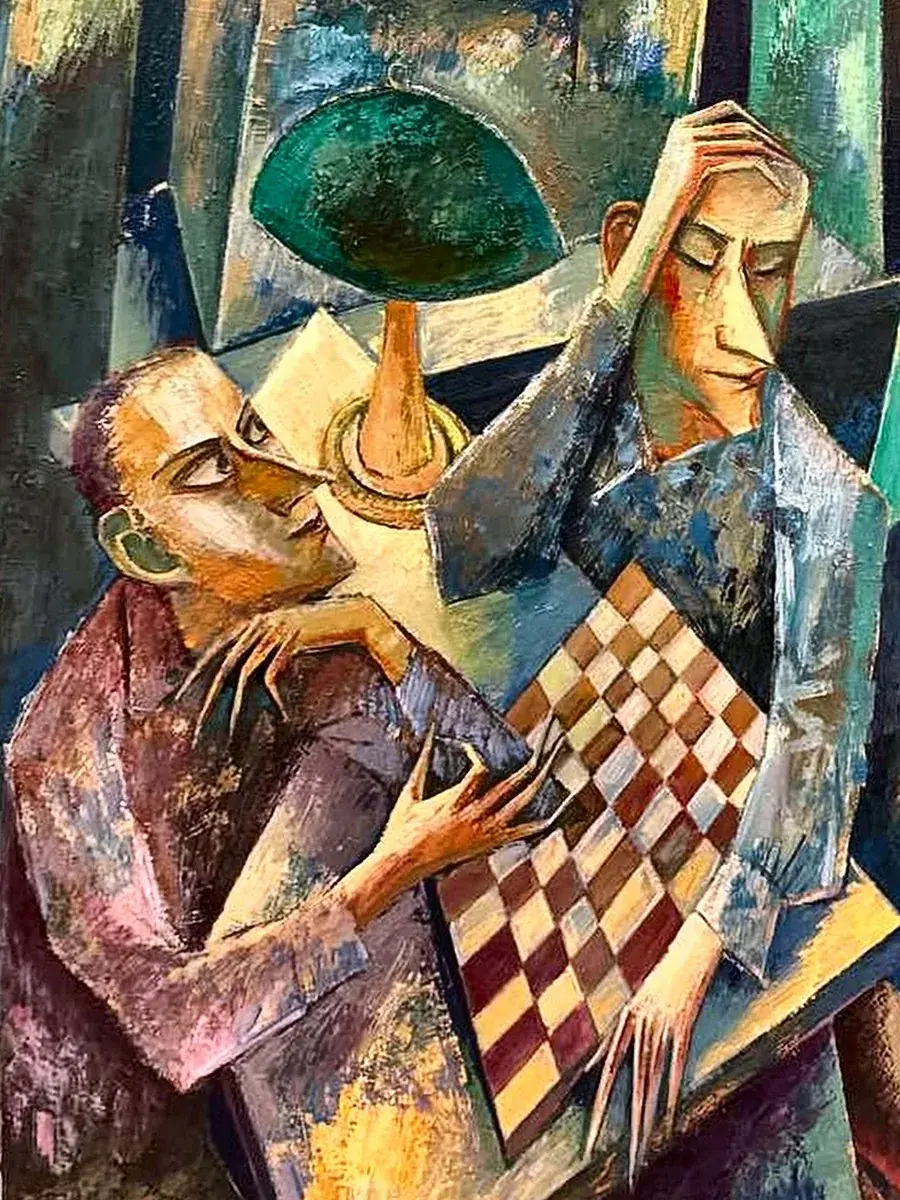
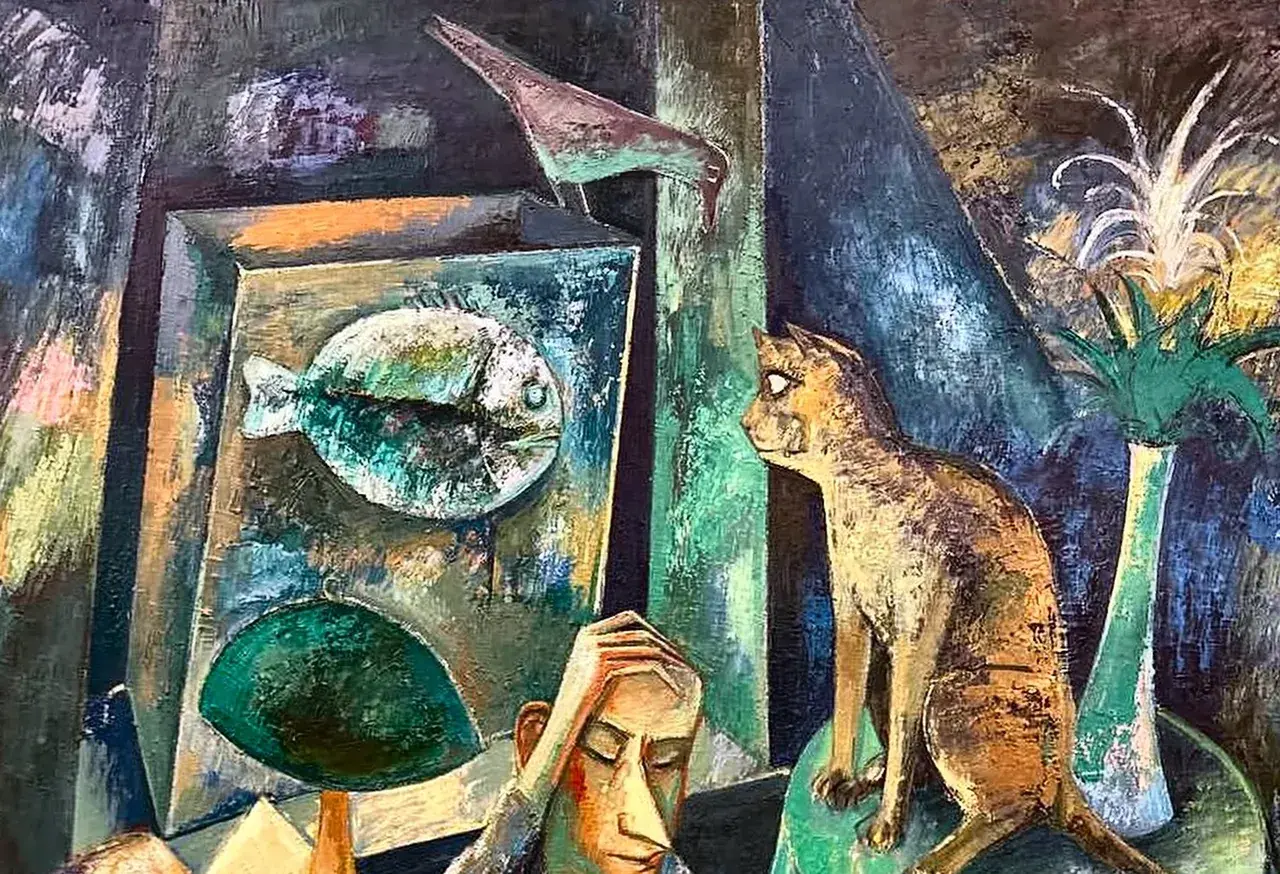
Table of contents
Some books you read and put down. Others you never quite leave. The Master and Margarita turned out to be the second kind for me: the first work on the novel appeared in the early two-thousands, and the cycle now runs to some seven hundred canvases and sheets.
These are not illustrations in the usual sense — not pictures accompanying a text. They are closer to a parallel telling: what emerges when a novel lives in your head long enough that it starts demanding form.
Why this novel
Bulgakov is built in a way that resists linear reading. The novel holds three layers of time — modern Moscow, ancient Yershalaim, and Woland's timeless world — and they do not simply alternate but thread through one another. Painting handles this more easily than prose: on a canvas three planes can exist at once, and the viewer decides where to look first.
There is a personal reason too. I was born in the Cherkasy region, on the Dnieper — the same river Bulgakov was tied to all his life. It explains nothing rationally, but kinship with a text has to begin somewhere.
How to recognise the characters
Over twenty years the cycle has developed its own system of signs. Someone opening the works for the first time does not always know at once who they are looking at, so a few markers.
Woland — mismatched eyes. One dark, one light, as in the novel. Sometimes a sword and a feathered hat, sometimes not, but the eyes are always there.
Margarita — yellow flowers. They appear in the very scene where she meets the Master and remain her attribute throughout the cycle.
Behemoth — a cat behaving as a man: standing on his hind legs, holding objects, meeting your eye. In several works with a primus stove in one paw and a chicken leg in the other.
Yeshua — bound hands. Minimum of attributes, maximum of stillness in the posture.
Pontius Pilate — always in half-turn, shadow across one side of the face. The migraine he suffers in the novel is resolved through light.
Ninety works in the Polish edition
In 2010 a Polish publisher was preparing a new edition of the novel and looking for illustrations. Ninety works were selected from the cycle. The book appeared and was reprinted twice.
For me it was an important moment: painting that had come out of private reading returned to the text and became part of it. The circle closed.
Curiously, the novel with these works has never been published in Russia, though more than a thousand illustrations have been made over twenty years.
Pontius Pilate in a medical journal
In 2006 something happened that I could not have anticipated. The Lancet — one of the oldest and most respected medical journals in the world — published a paper on hemicrania, a form of migraine. My portrait of Pontius Pilate served as its illustration.
The editors' logic is clear enough: in the novel Pilate suffers from an “unbearable, invincible” headache that Bulgakov describes with clinical precision. Physicians recognised the account of a specific condition — and in the painting they saw what that condition looks like from outside.
Technique: oil and gouache
The cycle exists in two materials, and they work differently.
Oil on canvas — for large compositions where depth and surface matter. Oil allows you to build up layers, return to a work weeks later, reach the particular glow that only multi-layered painting gives. Such works take months.
Gouache on paper and board — for faster, sharper things. Gouache forgives no corrections and demands the decision immediately. There is more graphic edge in it, and it was largely the gouache sheets that went into the book edition.
Is the cycle finished
No. The novel does not exhaust itself — each return turns up a scene that would not come before, or a character in whom something new opens.
Other cycles run alongside it: Don Quixote after Cervantes, Animal Farm after Orwell, a separate line with Stańczyk — the Polish court jester, the only man permitted to tell the king the truth to his face. They speak to one another: all of them are about how a person behaves in the face of power, absurdity and inevitability.
Frequently asked questions
Can a work from the cycle be bought?
Yes. Some of the canvases remain in the studio and are available. Works that have entered private collections are marked accordingly.
Are there prints or reproductions?
The cycle exists in originals. I do not issue printed reproductions — the oil surface disappears in print, and without it the work loses half its meaning.
What does a work from the cycle cost?
It depends on size and medium. Large-format oils start from several thousand euros; gouache sheets are considerably more accessible. The exact price for a particular work is available on request.
Where can the works be seen in person?
At the studio in Warsaw, by arrangement. Some of the works have been shown in solo exhibitions in Warsaw, Łódź, Sopot and Vienna.
If a particular work from the cycle interests you, or you would like to see the canvases in the studio, write to me. I reply within a day.