Pontius Pilate in The Lancet: how a painting reached a medical journal
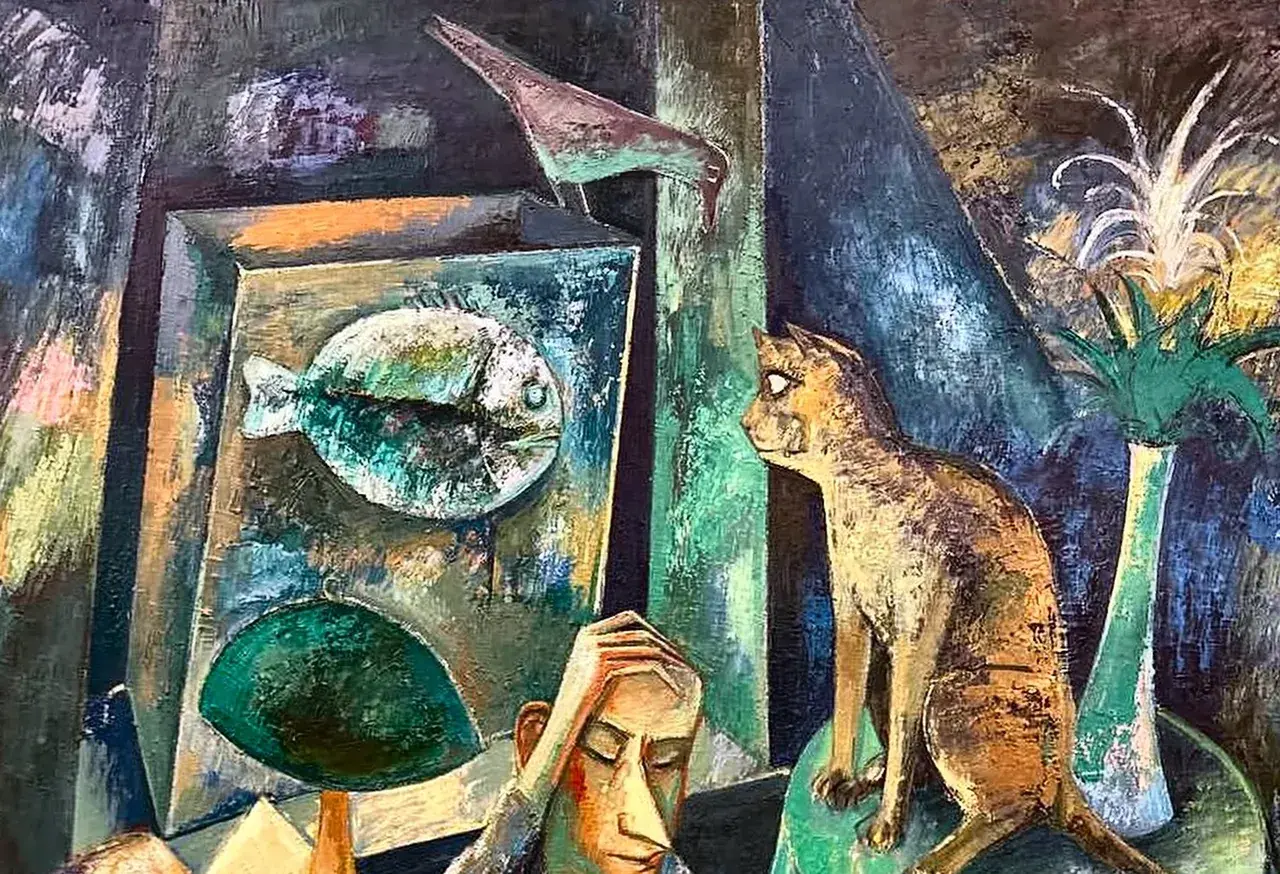
Table of contents
People ask about this episode more often than about any exhibition. And it is genuinely odd: a medical journal founded in 1823 publishes a paper on a form of migraine and illustrates it with the portrait of a character from a novel by Bulgakov.
Here is how it came about.
What The Lancet is
A British medical journal published since 1823. One of the four titles regarded in medicine as the most authoritative in the world — alongside The New England Journal of Medicine, JAMA and the BMJ.
For a physician, publication in The Lancet is what a solo exhibition at Tate would be for a painter. The journal is read everywhere, and what appears in it enters professional circulation.
Its illustrations are usually technical: photographs, diagrams, micrographs.
How the painting got there
In 2006 the journal was preparing a piece on hemicrania — a form of headache in which the pain occupies strictly one half of the head. The condition has long been described but is hard to diagnose: patients often cannot explain what exactly they feel.
The authors were looking for an image that would show not the mechanism but the state. What a person in such pain looks like from outside.
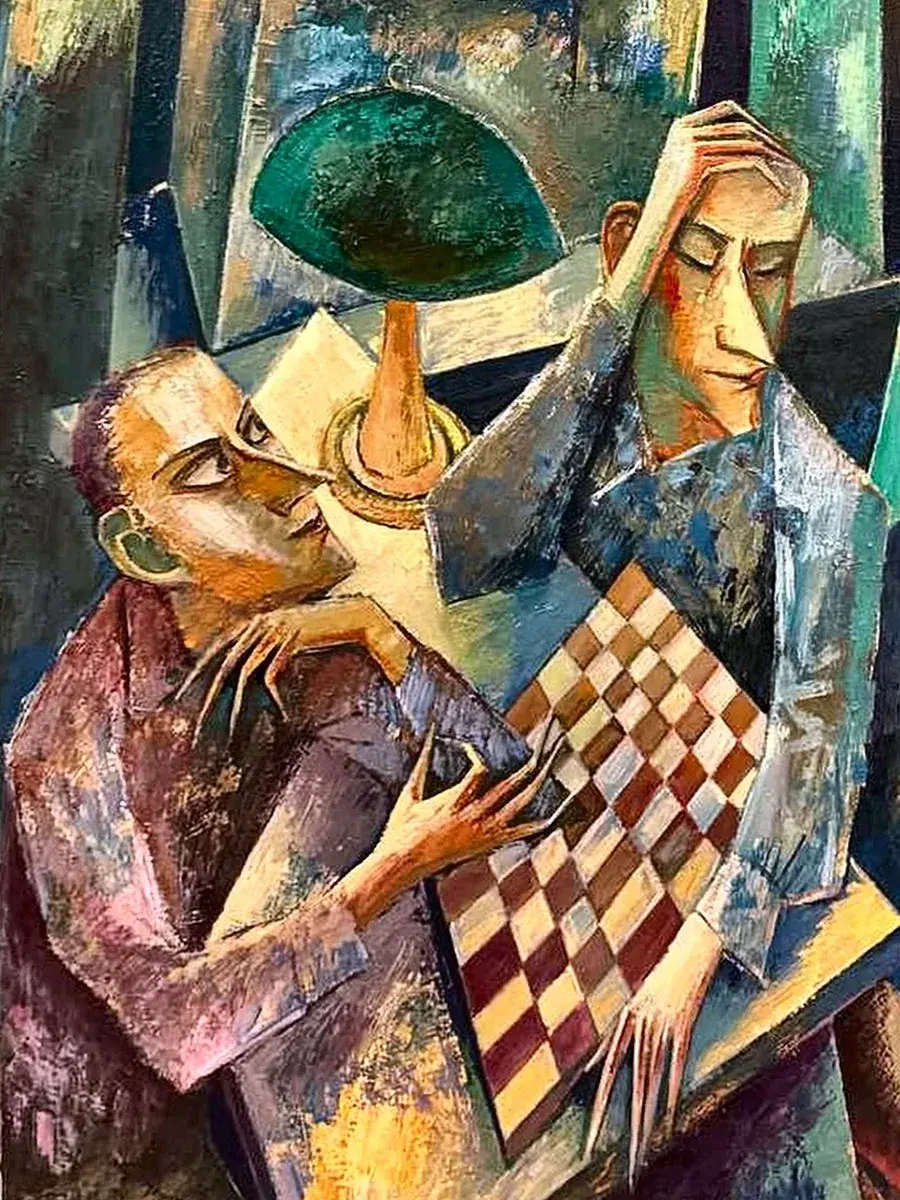
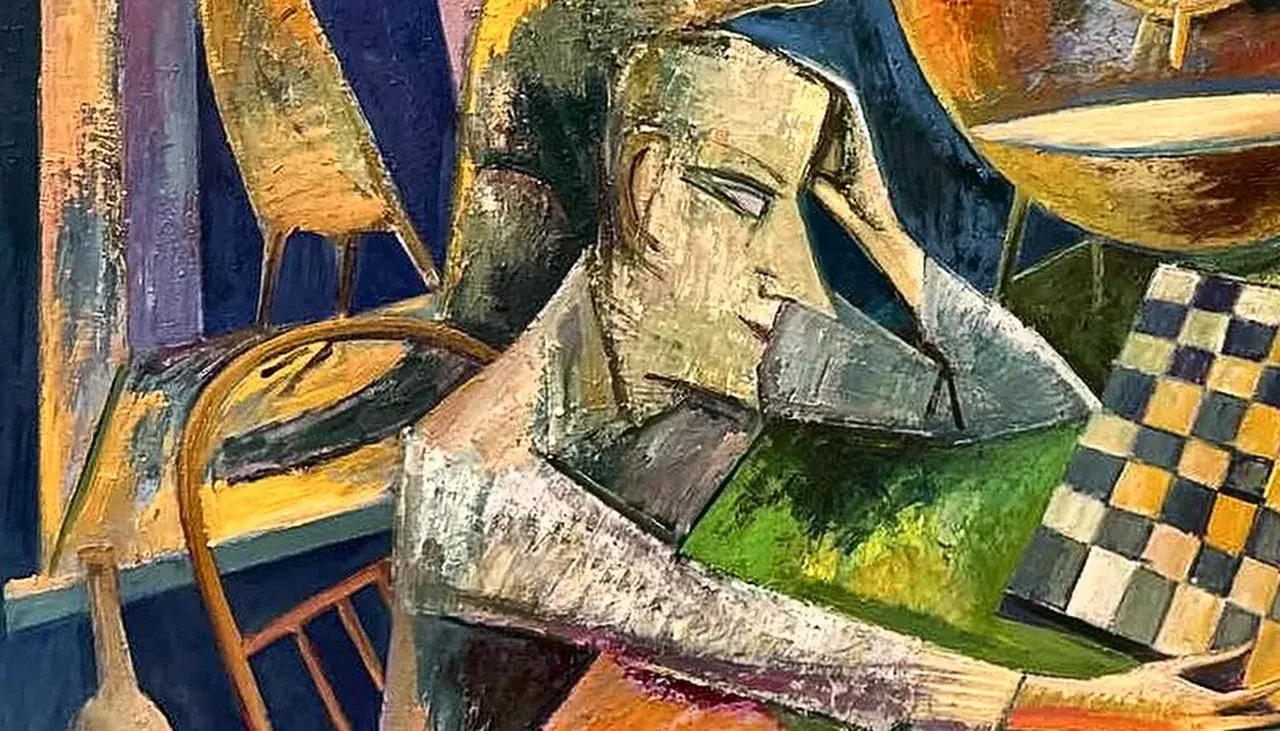
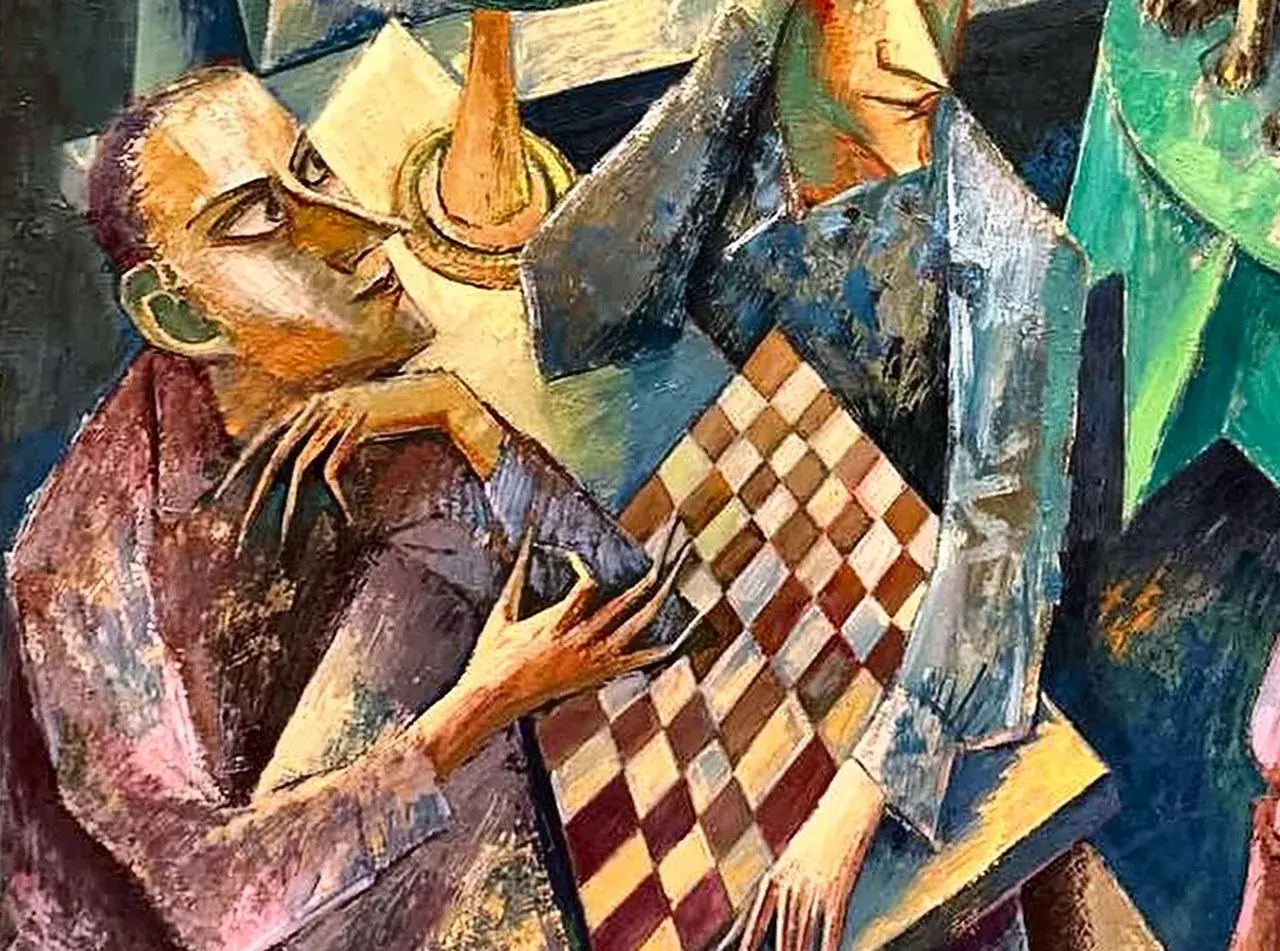
They found it in my portrait of Pontius Pilate from the cycle on The Master and Margarita.
Why that particular work
The reason lies in Bulgakov's text.
In the novel Pilate suffers from a headache, and the description is made with a precision one does not expect from literature. Bulgakov was a physician by training — he graduated from the medical faculty at Kyiv University and practised for several years. He did not write “his head ached” but described a specific condition with specific signs.
Pain covering one half of the head. Intolerance of bright light. Irritation at sounds. The sense that only poison can help now.
Physicians recognised a clinical picture in this. Not a literary metaphor but an account written by someone who knew what he was describing.
My portrait, in turn, was painted from that description. Pilate is shown in half-turn, with a shadow falling across one side of the face. That is not a decorative decision — it is an attempt to show the asymmetry of a state in which one half of the head lives differently from the other.
The editors saw in the painting what they had seen in the text.
What it changed
In practical terms, nothing. The publication brought no exhibitions, no sales, no mentions in the art press.
But it gave me something no exhibition had: confirmation that the work reads outside its own context.
The people who looked at the portrait had not read Bulgakov and did not know who Pilate was. They saw the face of a person in a particular state — and recognised that state professionally, by its clinical signs.
That is the best test figurative painting can pass. If a work needs explaining, it does not work. If it is understood by those who know nothing of the context, it is built correctly.
About Pilate in the cycle
Pilate is one of the recurring figures in the cycle on The Master and Margarita, and the hardest to paint.
In the novel he is neither villain nor victim. A man who knows he is acting wrongly, understands the consequences, has the power not to do it — and does it anyway. Not from fear for his life but from something smaller: fear of a denunciation, career caution, an unwillingness to complicate things.
That is harder to paint than a villain. A villain has an expression. Pilate has the expression of a man who has just decided not to object.
That is why every work with him carries that asymmetry: half the face in shadow, the gaze slightly aside, the posture of someone who wants the conversation to end.
The headache here is not the subject but a way of showing an inner state through a physical one.
Frequently asked questions
Can this work be seen?
The Pilate portraits belong to the cycle on *The Master and Margarita*. Some works remain in the studio, others are in private collections. The status of each is given in the catalogue.
Was the publication agreed with the artist?
Yes, the editors sought permission to use the image. That is standard practice for scientific journals.
Are there other uses of the work outside an art context?
In 2010 ninety works from the cycle entered the Polish edition of the novel. Vino della Pace in 2001 — a label for an Italian winery. But the medical journal is a singular case.
Was the portrait painted for the medical subject?
No. The work was made within the novel cycle, long before the publication. The editors found it already finished.
Works from the cycle on The Master and Margarita can be seen at the Warsaw studio by arrangement. The catalogue of available works with prices is on the site.