Don Quixote in oil painting: why the figure does not age
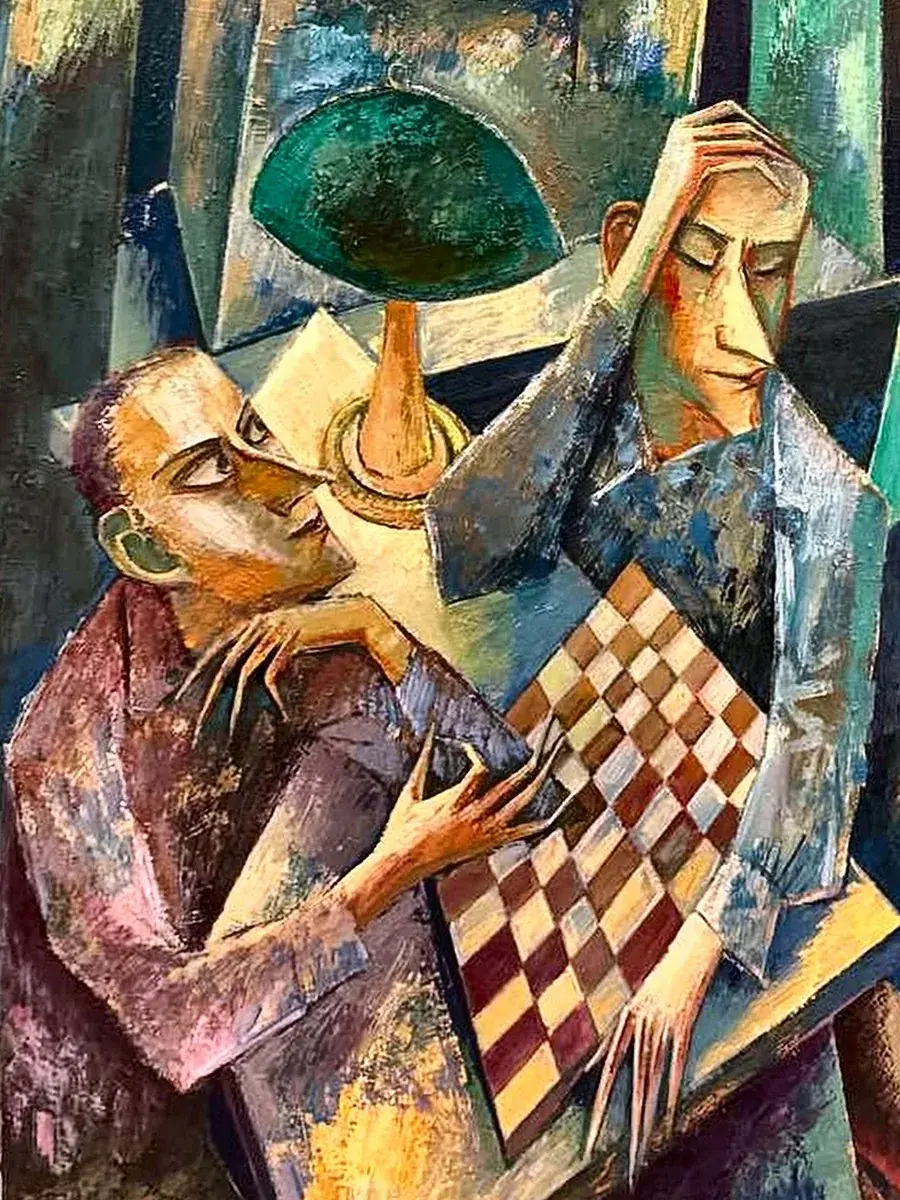
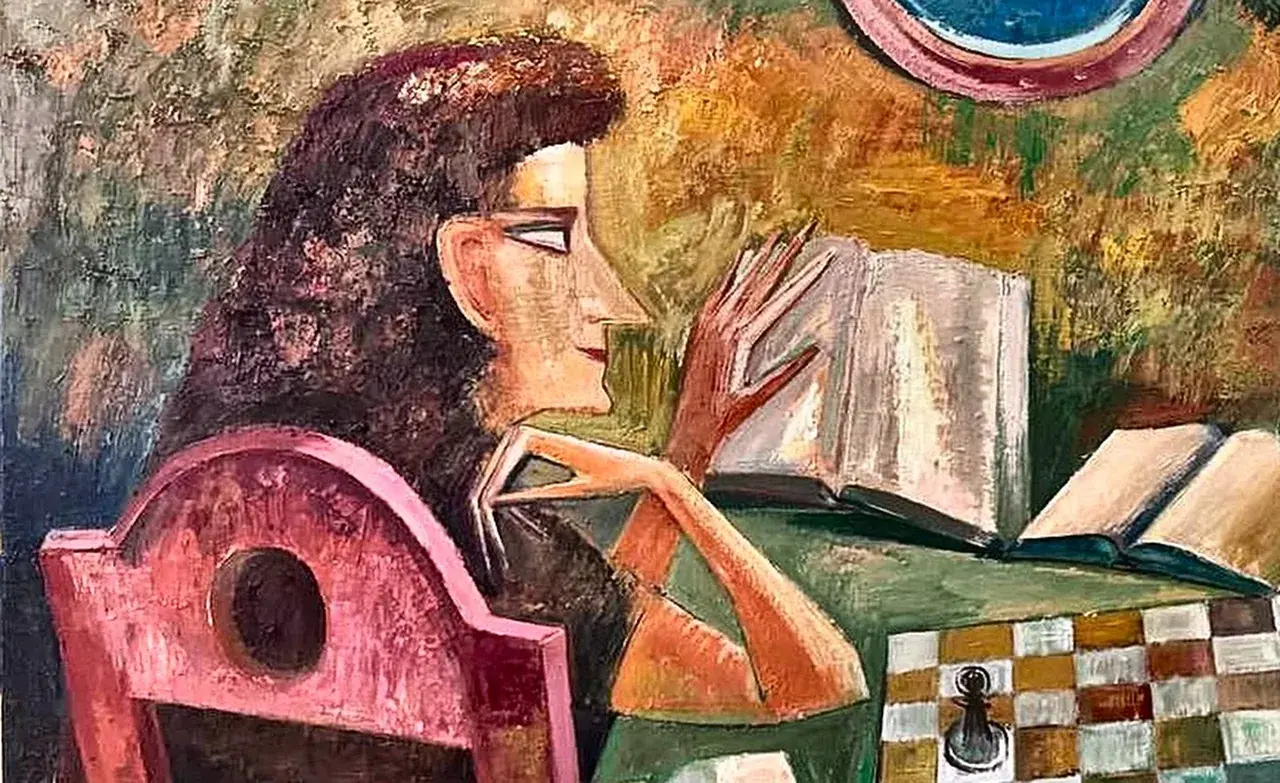
Table of contents
Cervantes wrote a parody. He was mocking the chivalric romances that people at the start of the seventeenth century devoured as greedily as we now devour social media, and with the same effect on common sense.
Four hundred years later the parody remains and the thing it mocked has vanished. Nobody remembers the chivalric romances. Everybody remembers Don Quixote.
What actually happens in the novel
A man reads too many books and begins to see the world as they describe it rather than as it is. Then he acts on what he sees.
This is funny right up to the moment you notice that he carries the action through. Don Quixote does not back down when reality fails to match his conception. He continues — and in doing so he moves out of the category of fool into some other one.
Cervantes evidently noticed this himself somewhere along the way. The first part of the novel is still merciless; the second is different: the author gradually takes his hero's side, and in the ending, when Don Quixote recovers from his madness and dies an ordinary man, it reads not as a cure but as a defeat.
Why this is material for painting
Because the whole construction rests on a single visual contrast, and that contrast can be seen without reading a word.
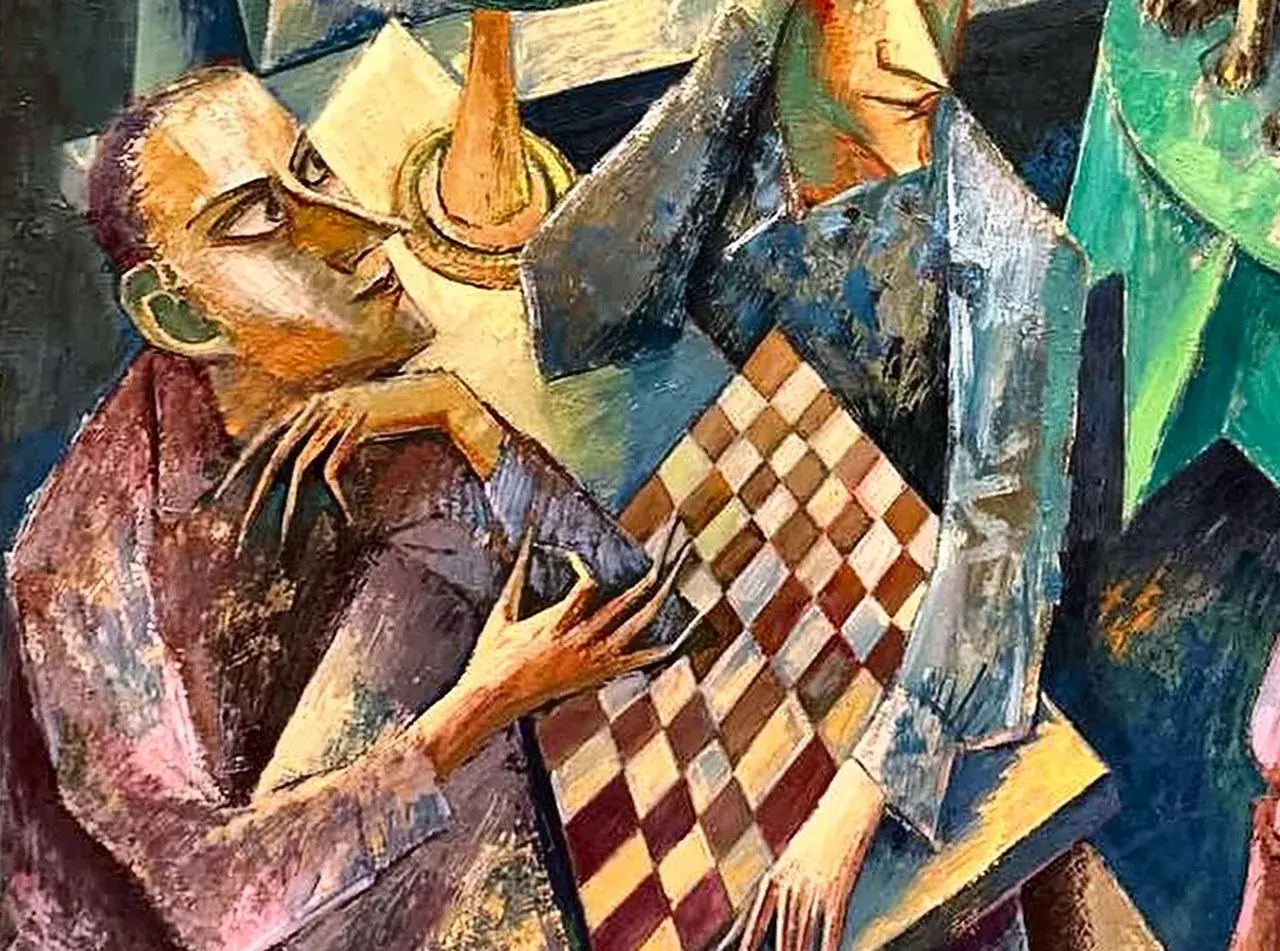
Don Quixote is an extended vertical. Thin, bony, awkward, always slightly taller than those beside him. Sancho is round, grounded, his centre of gravity near the floor. One looks upward, the other at his feet.
This is not my invention; it is in the text. But in painting the pairing works better than anywhere else: two bodies in one frame, and everything is said, without plot and without a caption.
That is why the cycle rests on the two of them. The rest is circumstance.
What I paint in it
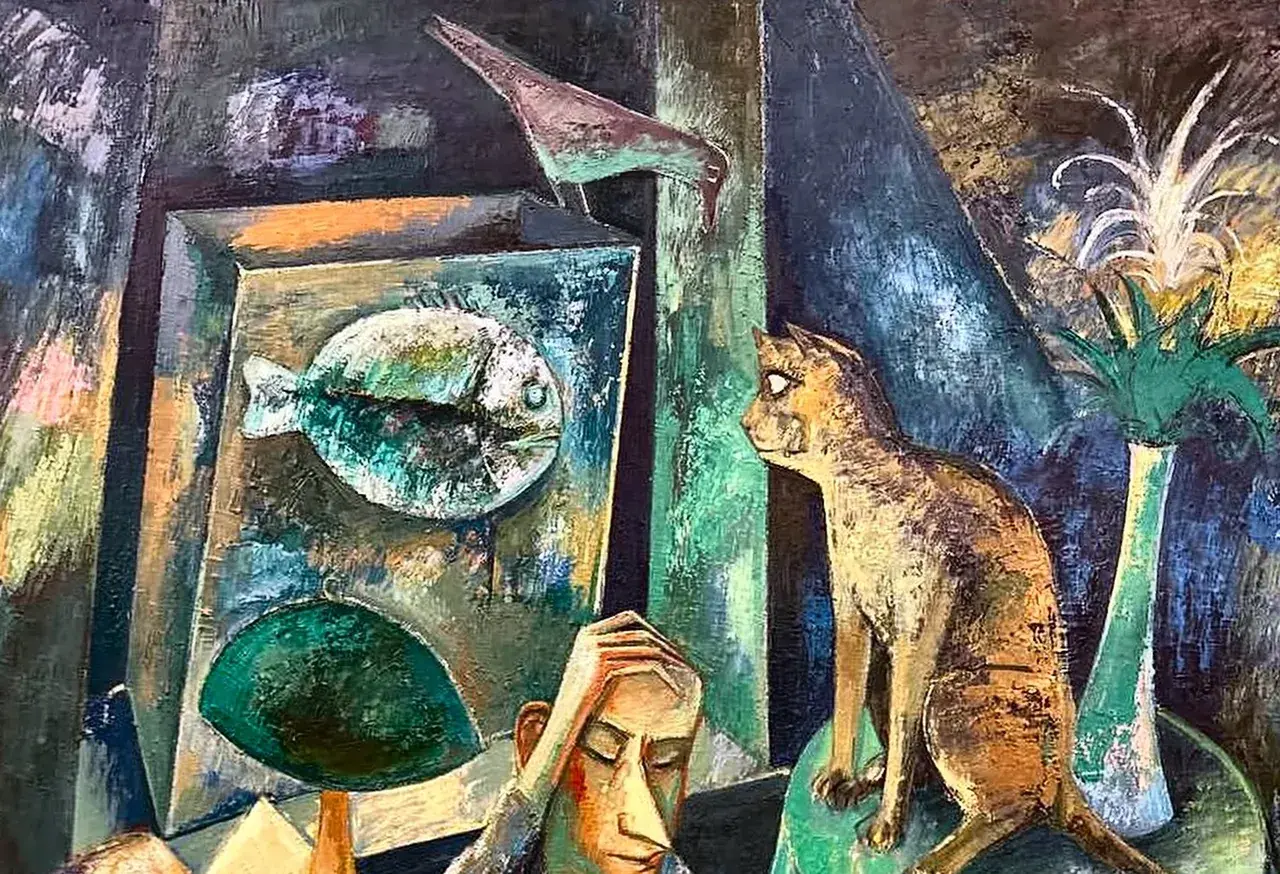
Not the adventures. Windmills do not appear in my work at all — too recognisable a sign, it turns the painting into the illustration of an anecdote.
Something else interests me: the condition of a man who does not see what everyone else sees and has no intention of correcting himself.
That condition has concrete manifestations that can be painted. The stance in which a person stands before something that is not there. A gaze that passes beside the person addressed. A gesture into empty space. Sancho watching from the side — not judging, simply observing, because he is being paid and one has to move on.
How this differs from illustration
Illustration is tied to a scene. It accompanies the text, shows what was described a paragraph above, and without the text it loses half its meaning.
A cycle is built differently. The work has to stand on its own, without the book beside it. A viewer who has never read Cervantes should see something comprehensible on the canvas — two people, one of whom is not here.
So in my work there is no helmet, no lance, no Rocinante. There is nothing that would require the caption “this is Don Quixote”. The figure is recognised by its build, not by its props.
Don Quixote and Stańczyk
Two cycles that at first glance have nothing in common are in fact speaking about related things.
Stańczyk knows the truth and is permitted to say it, and it changes nothing. Don Quixote does not know the truth — he sees his own version of the world — and likewise changes nothing, but for the opposite reason.
One recognises his powerlessness and stays silent. The other does not notice it and acts. Both are alone among people.
This kinship did not come from a plan. I noticed it some ten years after both cycles were already running side by side.
On format
The works in the cycle are predominantly vertical. Not by accident: the figure itself demands the vertical, and a horizontal format either crops it or forces in unnecessary surroundings.
Sizes run from medium to large. Don Quixote in a small format stops being elongated, and the whole contrast with Sancho disappears.
The technique is the same as in the other cycles: oil on linen, multi-layered painting with glazes. A large-format work takes months, with pauses for drying between layers.
Frequently asked questions
Can I buy a work from the cycle?
Some canvases remain in the studio. Prices, dimensions and the status of each work are given in the catalogue — available ones are marked as such, the rest have gone into private collections.
Are there recognisable scenes from the novel in the cycle?
No, and that is a deliberate choice. Windmills, helmet, lance are signs too literal; they turn a work into an illustration. My interest is the hero's condition, not an episode from the book.
Do I need to have read Cervantes to understand the works?
No. The works are built to stand alone: two people, one of whom is not looking where everyone else is looking. Knowing the novel adds a layer but is not required.
How many works are in the cycle?
The cycle has run for over twenty years and has no target number. New works appear when a situation presents itself that did not exist before.
If a particular work from the cycle interests you, or you would like to see the canvases at the Warsaw studio, write to me. I reply within a day.